Village Laduachaure, P.O, Dhikuli, 244715 Jim corbett ( Uttarakhand )
+91- 9927059665
thewildcrest@yahoo.com


Planning a corporate retreat is a different project from booking a hotel room block, it involves designing an agenda, coordinating transport for an entire team, and choosing a venue that supports both structured work sessions and genuine team bonding. This guide walks through the planning process end to end, using the hotels in Jim Corbett Ramnagar as the working example, since the region has become a popular offsite destination for Delhi-NCR-based companies.
Corporate retreats are often planned reactively, someone suggests a location, a date gets picked based on calendar availability, and the agenda gets filled in closer to the event. This approach frequently produces retreats that feel disjointed, either overloaded with back-to-back sessions that leave no room for genuine team bonding, or so loosely structured that attendees leave without a clear sense of what was accomplished. Working through retreat planning as a deliberate, step-by-step process, starting with objective, then headcount, then venue, then agenda design, produces a noticeably more coherent and higher-impact event.
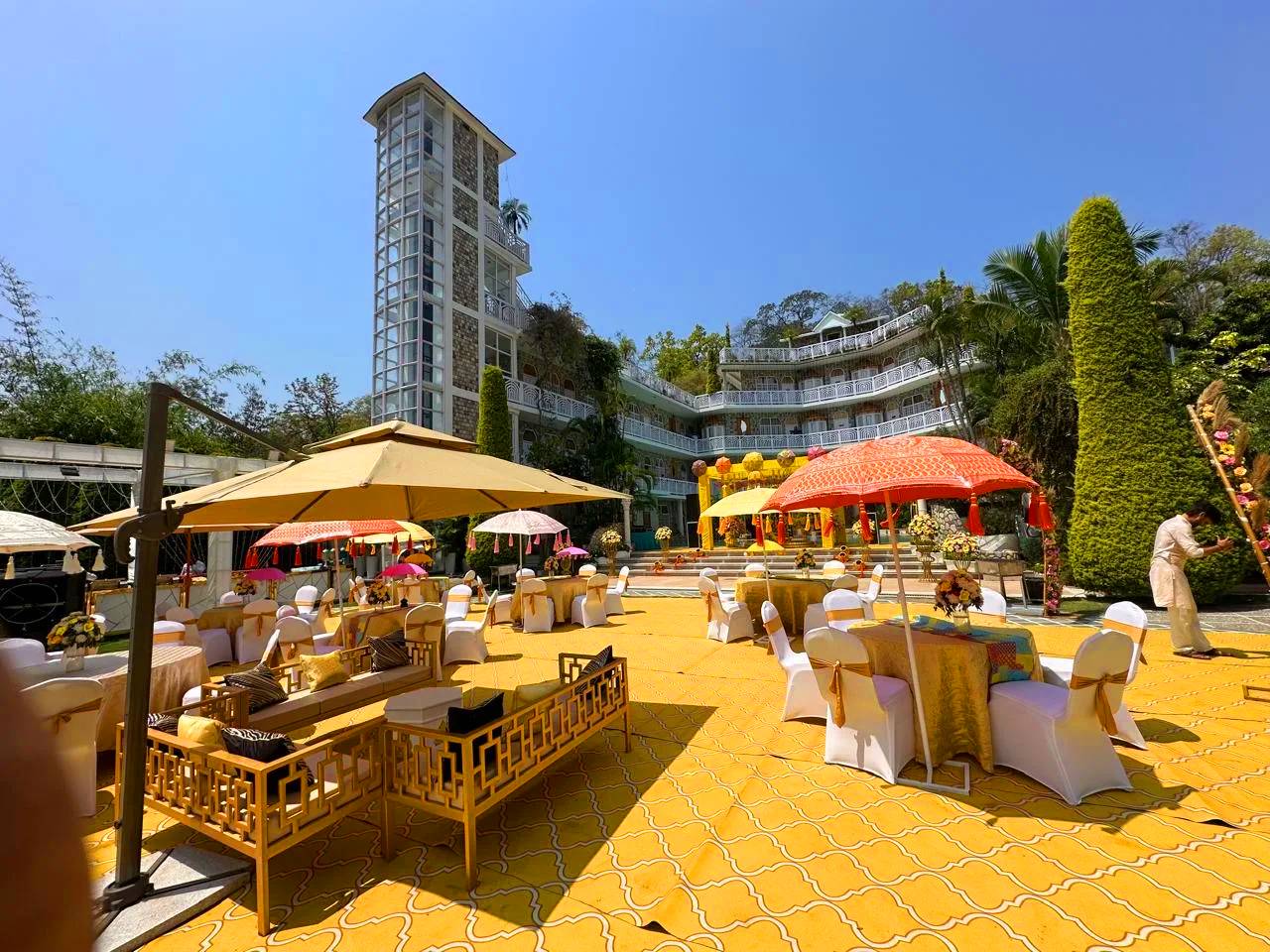
Retreat budgets vary widely by company size and objective, but a useful way to frame planning is around per-person cost across three components: accommodation and meals (typically the largest share), venue and hall usage fees, and activities or add-ons like safaris and evening entertainment. Requesting a single per-person, all-inclusive quote from the resort, rather than piecing together separate room, meal, and hall costs, makes it far easier to compare total retreat cost against your allocated budget and to communicate a clear number to finance or leadership for approval.
Before looking at venues, clarify what the retreat is actually meant to accomplish. A strategy offsite focused on annual planning has very different space and AV needs than a team-bonding trip centered on informal activities and a safari. Some companies blend both, a morning of structured sessions followed by an afternoon of recreational or bonding activities, which is often the most effective format for retreats longer than a single day.
Retreats land better when at least some input is gathered from the attending team before finalizing the agenda, even a short survey asking what employees hope to get out of the trip, whether more structured strategy time, more informal bonding, or specific activities like a safari, can meaningfully shape a more effective agenda than one designed entirely top-down by the organizing team. This is a small step that rarely adds significant planning time but noticeably improves post-event satisfaction scores.
Even with careful planning, retreats often incur small unplanned expenses, additional AV requirements discovered on-site, an impromptu activity the group requests, or last-minute dietary accommodations. Building a modest contingency, typically 5-10% above your core budget, avoids having to make awkward on-the-spot cost decisions during the event itself, and gives the organizing team room to say yes to reasonable requests that improve the experience without derailing the overall budget.
Get a firm headcount early, since this determines everything downstream: how many rooms to block, which conference hall size you need, and whether the resort can house the full group on-site. As a rule of thumb, confirm room inventory against your headcount with some buffer, since last-minute additions to the attendee list are common in corporate settings.
Not every hotel in the Ramnagar area is equipped for corporate groups. Prioritize properties with a demonstrated track record hosting bulk bookings, whether corporate, school, or large family groups, since this experience translates directly into smoother logistics on your event days. The Wild Crest, for example, has hosted corporate and school groups for years, giving its team practical familiarity with staggered check-ins, banquet-style group meals, and simultaneous programming across multiple spaces.
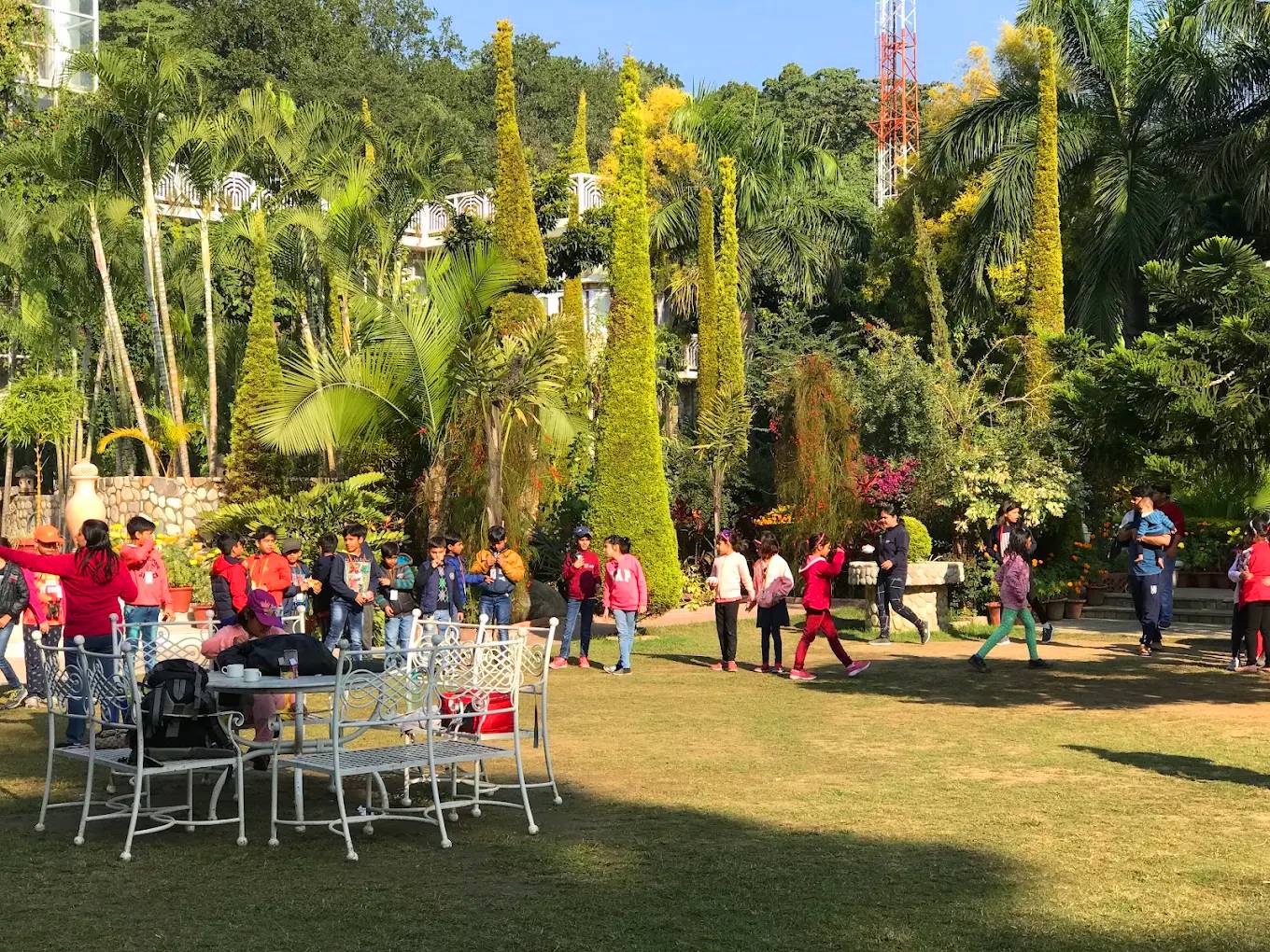
Request specifics on hall capacity, seating configuration options (theatre, classroom, boardroom), and available AV equipment, projectors, microphones, screen size, and internet bandwidth. Properties with multiple halls, three in The Wild Crest's case, give you the flexibility to run parallel breakout sessions or shift a session indoors if weather disrupts an outdoor plan.
A resort near a national park offers built-in activities that a city hotel cannot: jungle safaris, nature walks, and open lawns for team-building exercises. Structure the agenda to take advantage of these, formal sessions in the morning when energy and focus are highest, and safari or outdoor activities in the afternoon when a change of pace benefits the group more than another hour in a conference room.

Group meal service needs advance planning, particularly for teams with diverse dietary requirements. Confirm buffet versus plated service, how the kitchen handles vegetarian, vegan, or allergy-specific requests at scale, and whether meal timing is flexible enough to accommodate a packed agenda without long waits between sessions and food service.
The evening program, whether a bonfire, themed dinner, or informal games night, is often what employees remember most from a retreat. Resorts with expansive lawns support this naturally; confirm what evening activity options the property can help coordinate, since some resorts offer this as part of a package while others expect the organizing team to bring in external entertainment vendors.
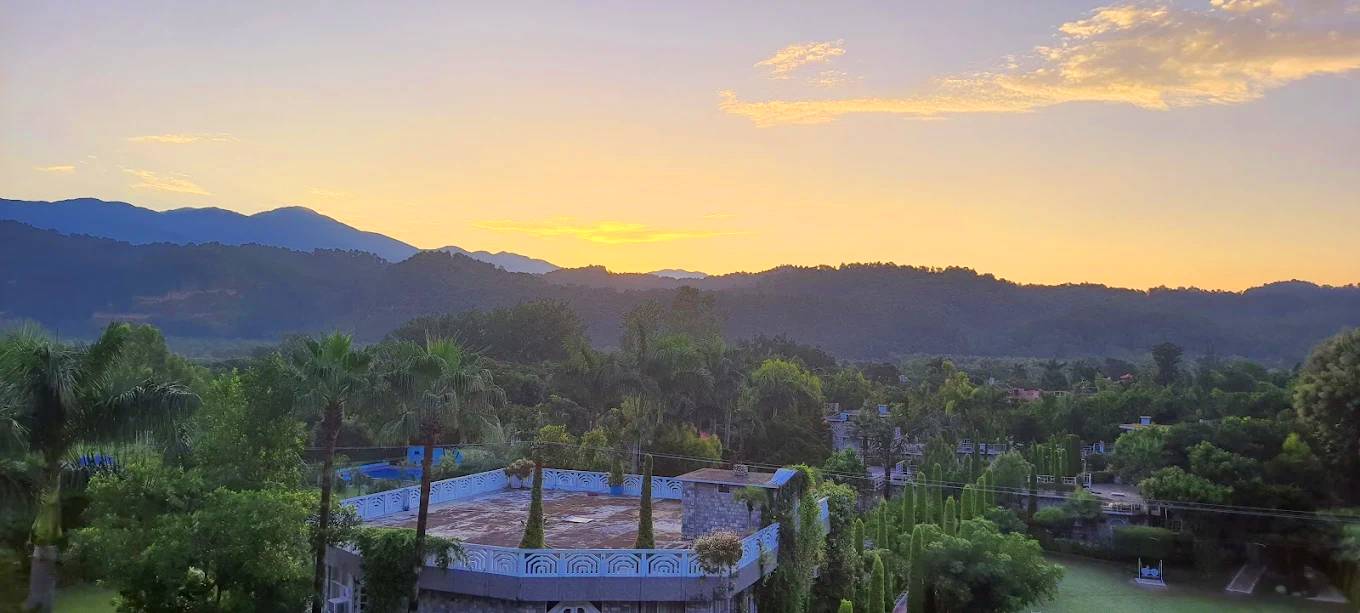
Confirm travel time and road conditions from your team's origin city, whether the resort can assist with local transport for airport or railway station pickups, and what the check-in and check-out flow looks like for a large group arriving together, since staggered arrivals can otherwise eat into your first day's agenda.
Request a single proposal covering rooms, meals, hall usage, and any add-on activities like safaris, rather than negotiating each component separately. A consolidated proposal is both easier to budget against and a good indicator of how organized the resort's events team is likely to be during execution.
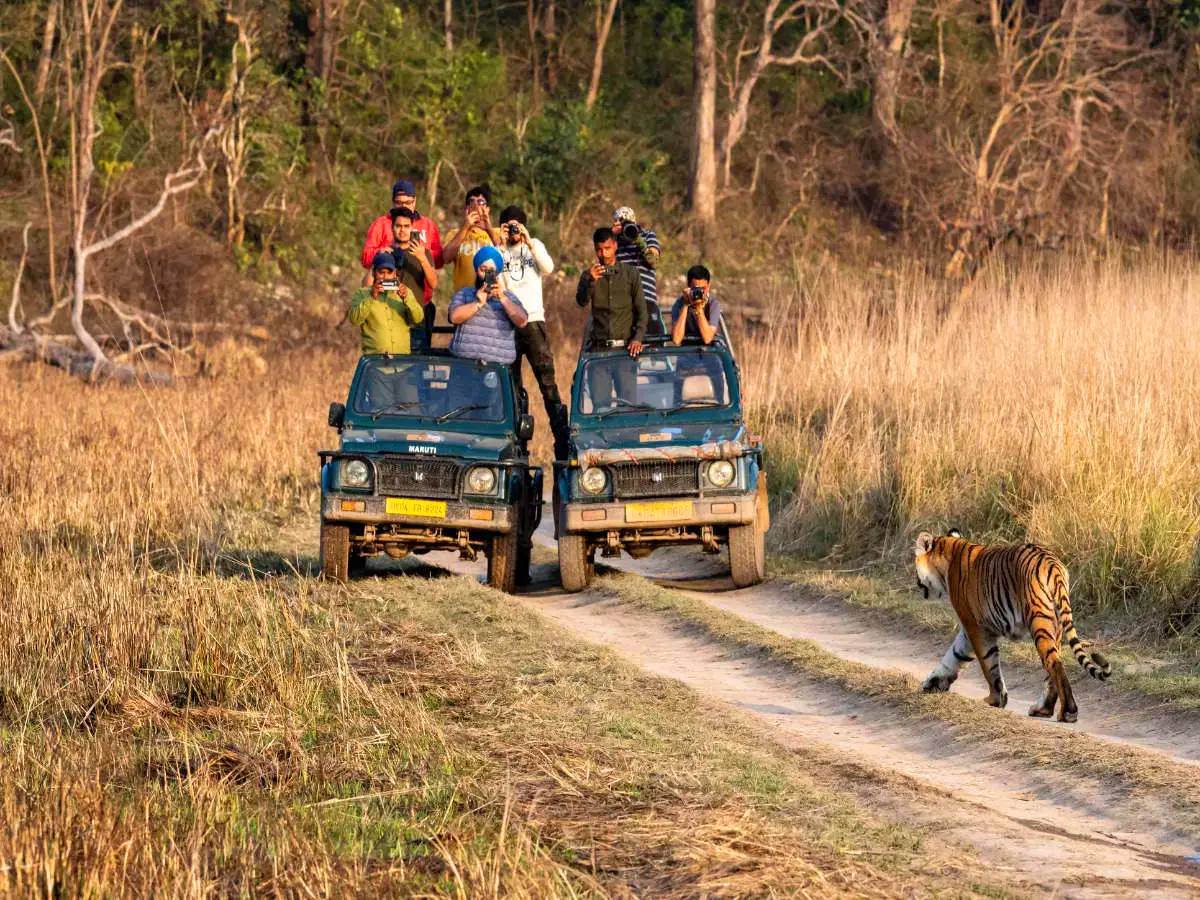
Ramnagar's roughly five-to-six-hour drive from Delhi-NCR keeps travel manageable for a two- or three-day retreat, while its proximity to Jim Corbett National Park adds a genuinely differentiated activity, a wildlife safari, that few other offsite destinations within similar driving distance can offer. Combined with resorts experienced in managing group logistics, the region has become a practical and increasingly popular choice for corporate retreats.
Retreat length should match your objective. A focused, single-topic strategy session can work well as a tight two-day trip, arrive, work, socialize, depart, without excessive downtime. A broader annual planning retreat, or one intended primarily for team bonding and culture-building, often benefits from a third day, giving the group enough time to genuinely unwind and engage informally rather than feeling like the entire trip is a compressed work session with a change of scenery. Budget and time-away-from-work constraints will ultimately guide this decision, but it is worth consciously choosing the format based on your actual objective rather than defaulting to whatever length previous offsites happened to run.
Morning arrival and check-in, followed by a light lunch and an icebreaker activity on the lawn. Afternoon strategy session in the main conference hall, broken by a tea interval with an outdoor setting. Evening bonfire and informal dinner, allowing cross-team conversations away from the structured agenda.
Early-morning jungle safari for those who wish to join, followed by breakfast and a shorter, focused wrap-up session covering key takeaways and action items. Afternoon departure, with the second day intentionally kept lighter to avoid retreat fatigue and ensure the team leaves on a high note rather than a rushed final session.
Organizers frequently underestimate transfer time between the pickup point (railway station or a designated meeting point in Delhi) and the resort, leading to a compressed first day.
Others overpack the agenda, leaving no room for the informal interactions that often deliver the most lasting value from a retreat.
A third common mistake is failing to confirm AV and connectivity requirements in writing ahead of time, only to discover on-site that a specific projector resolution or stable internet bandwidth isn't available for a planned virtual presentation or livestream.
A successful corporate retreat depends less on finding the most scenic hotel and more on finding one that can execute reliably at your group's scale, adequate rooms, sufficient hall capacity, dependable AV, and a team experienced in managing bulk bookings. The Wild Crest's history with corporate and school groups, combined with its conference infrastructure and safari-adjacent location, makes it a strong candidate for teams planning a retreat in the Jim Corbett Ramnagar area.
Request a consolidated retreat proposal through the Meetings and Events page or Contact Us.