Village Laduachaure, P.O, Dhikuli, 244715 Jim corbett ( Uttarakhand )
+91- 9927059665
thewildcrest@yahoo.com


Corporate offsites have quietly moved away from generic city-hotel conference rooms toward destinations that actually give teams a reason to disconnect and re-engage. Ramnagar, at the doorstep of Jim Corbett National Park, has become a popular choice for exactly this reason: it is close enough to Delhi-NCR for a two- or three-day trip, but different enough in landscape and pace to genuinely shift a team's mindset out of office mode.
For years, the default corporate offsite format was straightforward: a city hotel, a windowless conference room, a fixed agenda, and a group dinner at the end of the day. That format still exists, but increasingly, companies are recognizing that the value of an offsite comes as much from the change of environment and the informal interactions it enables as from the formal agenda itself. This shift is precisely why nature-adjacent resorts near destinations like Jim Corbett have seen rising interest from corporate planners who previously would have defaulted to a familiar five-star city property without a second thought.
The value of a well-run retreat can fade quickly if there is no follow-through once the team returns to normal work routines. Effective organizers circulate a short summary of key decisions and action items within a few days of returning, rather than letting outcomes sit in someone's notes indefinitely. Some companies also create a shared photo or highlights recap from the trip, particularly useful when a safari or bonfire evening produced genuinely memorable moments, to reinforce the retreat's impact in team communications well after the event itself has ended.
A conference room with forest views and a lawn just outside the door changes the energy of a meeting in ways a windowless city hotel ballroom cannot. Beyond ambience, nature-adjacent resorts typically offer more flexible programming, teams can run structured sessions in the morning and shift to outdoor team-building or a jungle safari in the afternoon, all without leaving the property or navigating city traffic between activities.
There is also a practical cost angle: resort day-rates and banquet packages around Ramnagar are frequently more competitive than five-star city hotels, while offering considerably more space per attendee, useful for breakout sessions, informal networking, and simply giving people room to think.
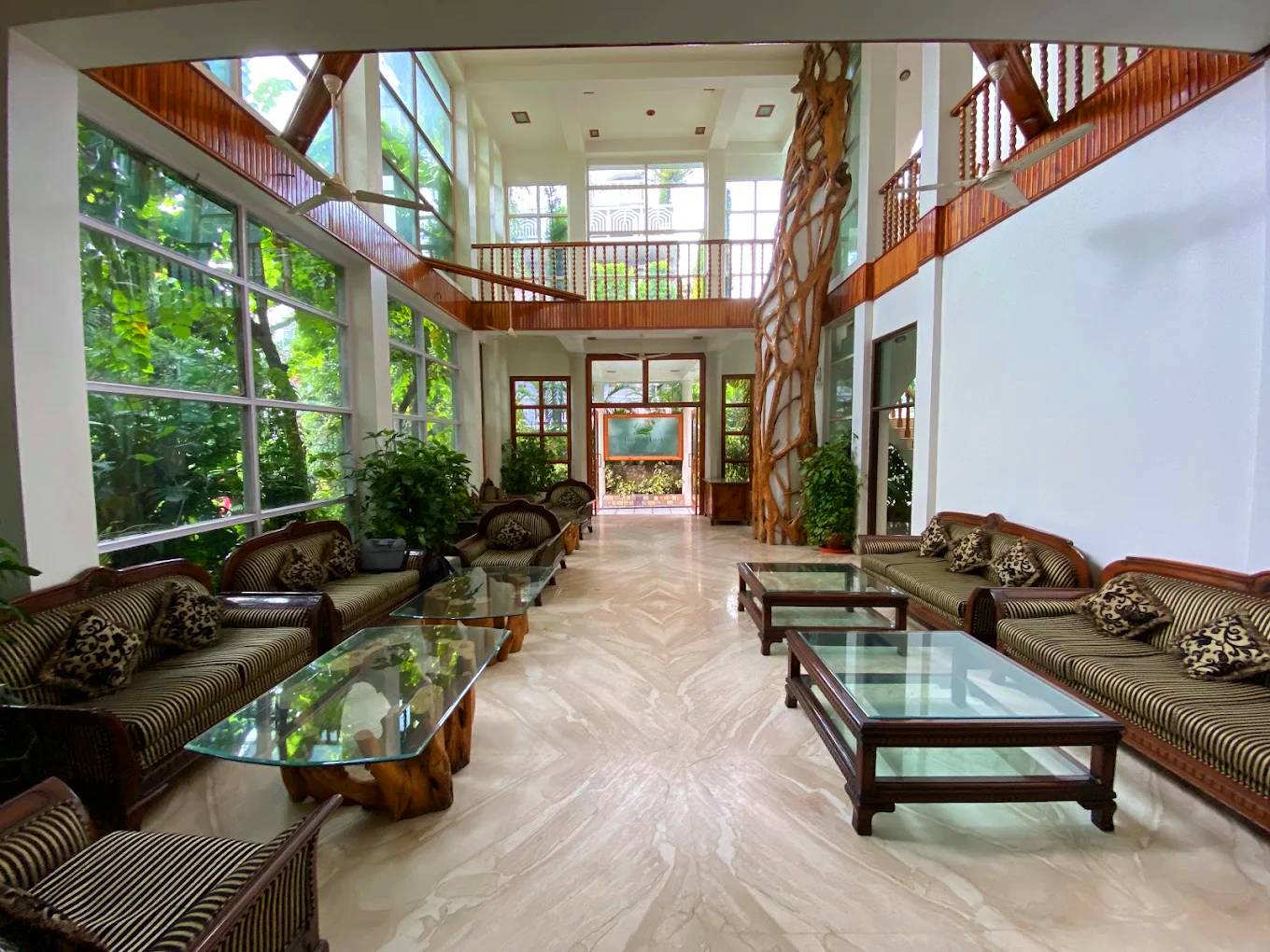
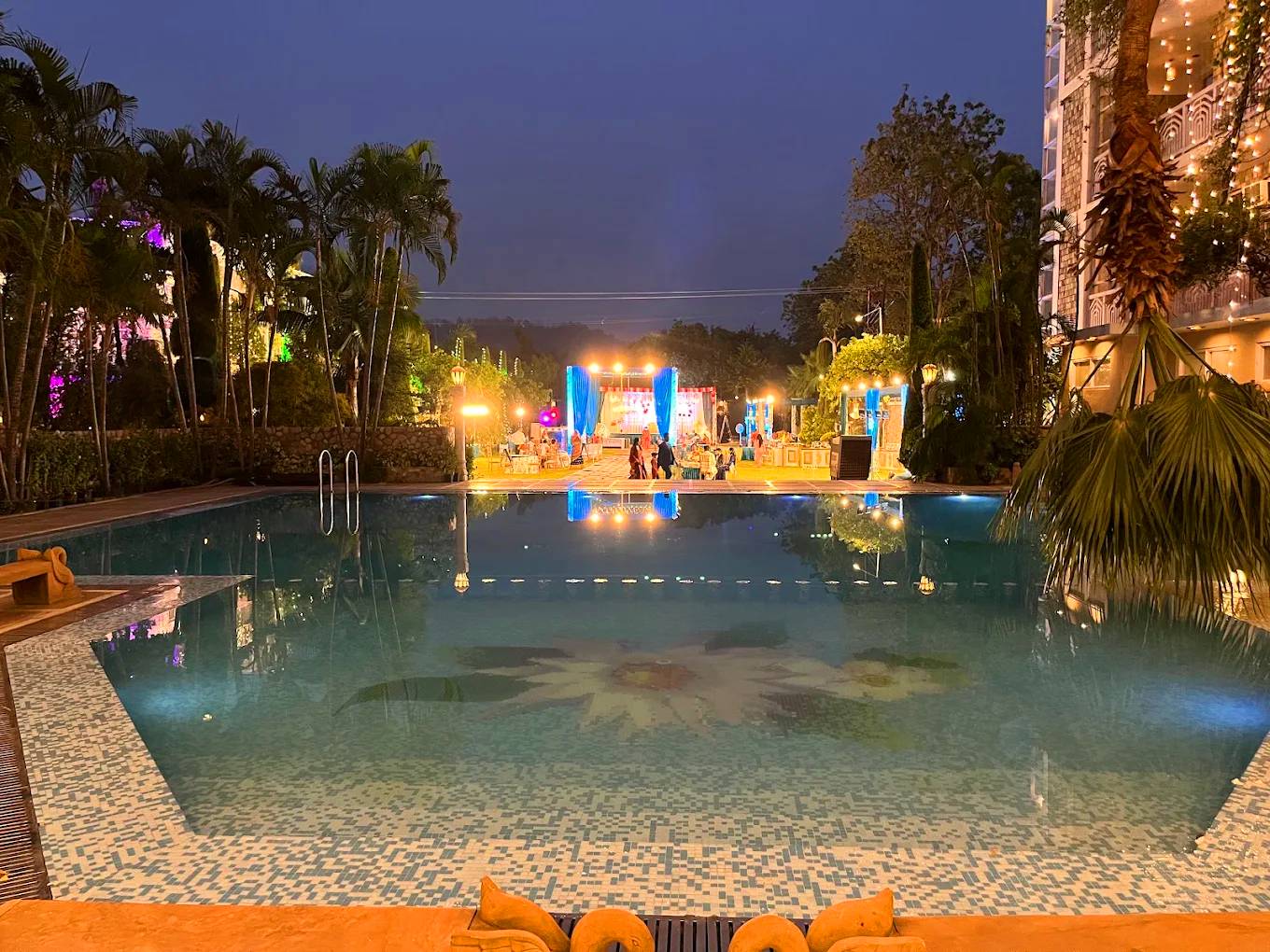
Beyond ambience, the practical logistics of getting a team to Ramnagar deserve mention. Most companies organize either self-drive convoys, a chartered bus, or individual cab bookings from Delhi-NCR, all of which are straightforward given the well-maintained road connectivity along the route. For teams flying in from other cities, the nearest major airport is in Dehradun or Delhi, with a further road transfer required either way, a factor worth building into your overall trip timeline, particularly if your agenda starts on the same day as arrival.
Employees planning an offsite sometimes need to make a case to leadership or finance for choosing a resort-based venue over a cheaper, more conventional city hotel. The strongest argument tends to combine cost comparison (resort day-rates and packages are often competitive with, or lower than, five-star city hotels once space-per-attendee is factored in) with the harder-to-quantify but well-documented engagement benefits of a genuine environmental change. Framing the request around specific, measurable outcomes, a survey-based satisfaction target, a defined agenda with clear deliverables, tends to land better with leadership than a purely experiential pitch alone.
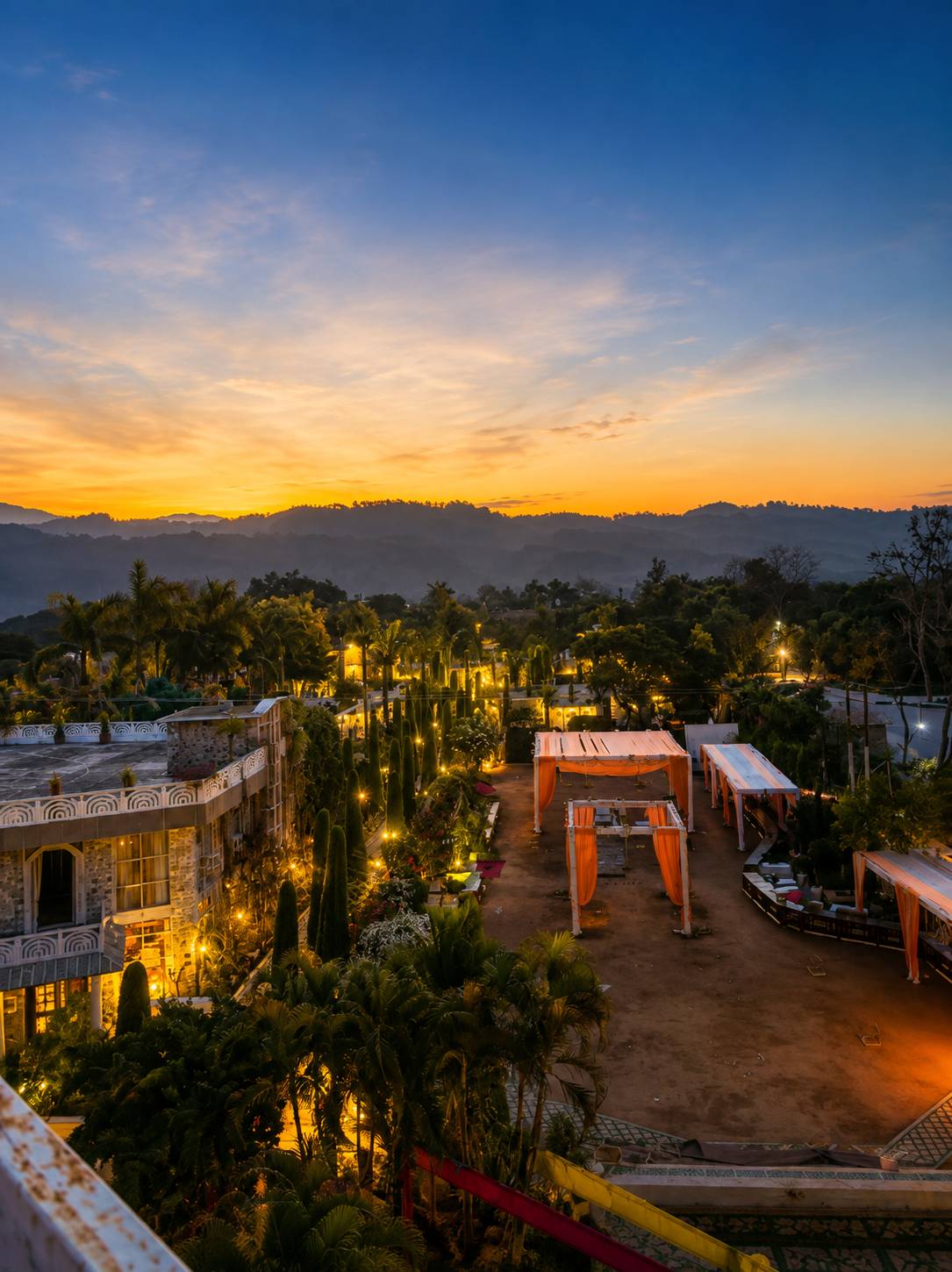
The Wild Crest has built genuine experience hosting bulk group bookings, having run school groups and corporate offsites for years alongside weddings. That track record matters: a resort accustomed to managing 50–150 person groups understands staggered check-ins, banquet-style meal service, and simultaneous programming needs in a way a property that rarely hosts groups does not.
The property's three conference halls support everything from a single all-hands session to multiple concurrent breakout tracks, while its four large lawns provide space for outdoor team-building exercises, bonfire evenings, or informal networking sessions after the day's formal agenda wraps up. With 65 rooms across cottage and pool-facing blocks, mid-sized teams can typically be housed entirely on-site, avoiding the coordination headache of shuttling staff between multiple hotels.
The most successful corporate retreats at nature-adjacent resorts tend to follow a similar rhythm, and resorts with in-house event coordination, such as The Wild Crest, can help structure this flow rather than leaving it entirely to the visiting team to plan around unfamiliar logistics.
Focused strategic sessions in the cooler morning hours.
A break for lunch and informal networking around the pool or gardens.
An afternoon activity block, safari, team-building, or free time.
An evening program, often a bonfire or themed dinner, that gives the team a shared, memorable experience distinct from a typical work dinner.
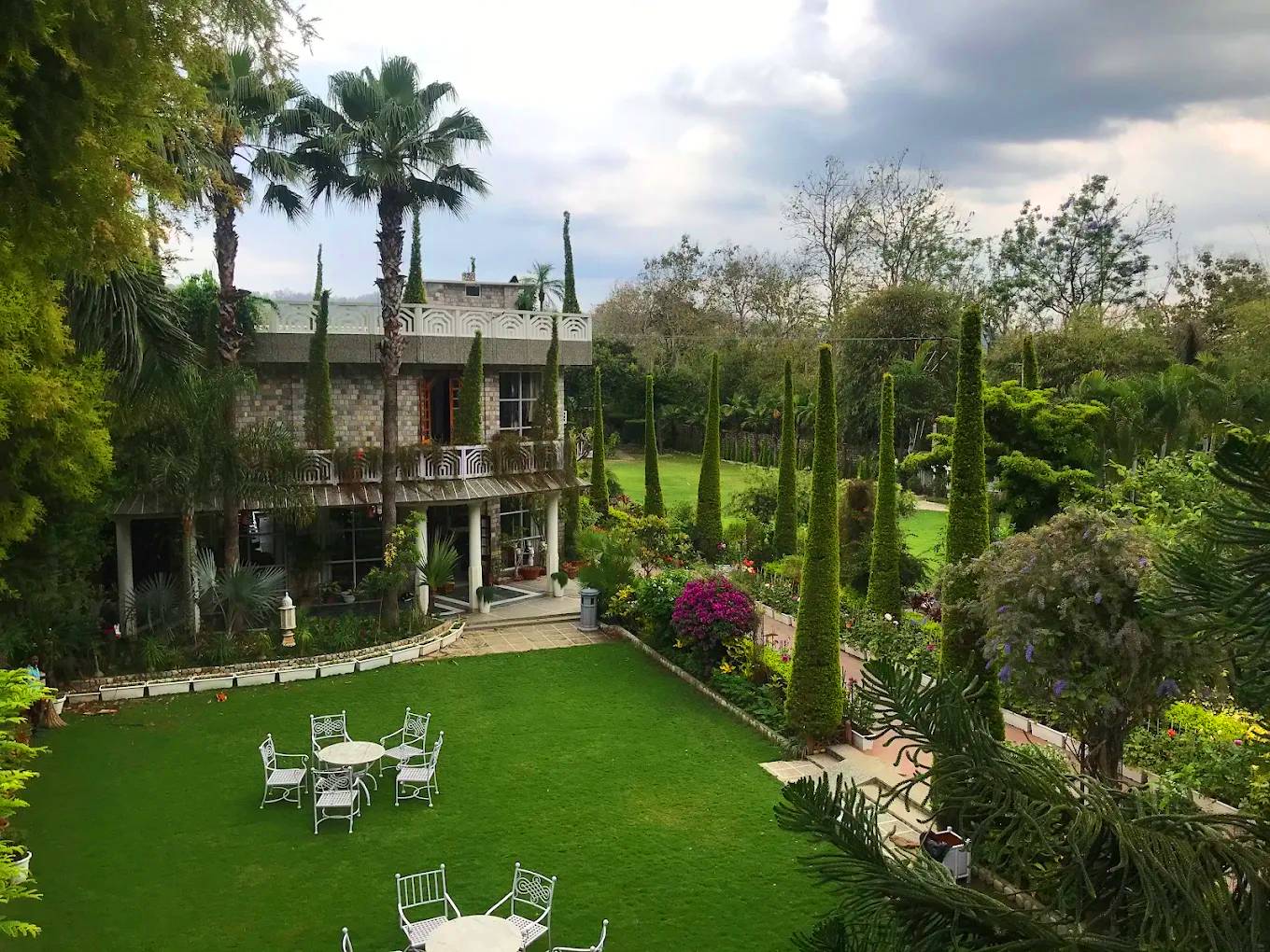
An increasing number of companies now factor employee wellness and environmental consciousness into venue selection, not just cost and convenience. Nature-adjacent properties with genuine green cover, gardens, and lower-density construction naturally align with this priority better than dense city hotels, and can support this positioning further with wellness-oriented programming, morning nature walks, yoga sessions on the lawn, or simply longer breaks between sessions than a typical city-hotel conference schedule allows.
Few corporate offsite locations can offer a genuine wildlife safari as part of the itinerary. A morning or evening safari into Jim Corbett National Park, easily arranged given The Wild Crest's proximity to Bijrani and Dhikala gates, gives teams a shared, slightly adventurous experience that tends to generate more lasting camaraderie than a standard team-building exercise. It also photographs and markets well for internal communications, useful for companies that want to showcase their culture on social channels.

Corporate groups often include employees with varying mobility needs, and a wheelchair-friendly, centrally clustered property layout, as at The Wild Crest, ensures no team member is functionally excluded from sessions or evening events due to inaccessible room blocks or long walks between venues.
When evaluating resorts for a corporate offsite, teams should confirm the following. Resorts with established group-booking experience typically answer these questions clearly and quickly, which itself is a useful signal of operational maturity.
Not every team-building exercise lands well, and generic trust-fall style activities can feel forced to more experienced professional groups. The common thread across activities that work particularly well at a nature-adjacent venue like The Wild Crest is that they use the venue's natural strengths rather than trying to recreate a generic corporate training exercise in an unfamiliar setting.
Collaborative outdoor challenges on the lawns that use the natural terrain rather than imported equipment.
Small-group nature walks that naturally encourage one-on-one conversations away from the usual office hierarchy.
Shared, informal meals, a barbecue or bonfire dinner, that create space for cross-departmental conversations that rarely happen in a typical office setting.
HR and leadership teams increasingly ask for evidence that offsites justify their cost beyond anecdotal enthusiasm. A useful framework is to track three things post-retreat. Companies that run offsites at nature-adjacent venues consistently report that the informal, shared-experience elements score highest on post-event feedback, which is a strong argument for choosing a venue that supports this kind of programming rather than one built purely around a conference room.
Post-event engagement survey scores compared to a baseline.
Retention or internal mobility indicators over the following two quarters.
Feedback specifically about cross-team relationships formed during informal moments, the safari, the bonfire, shared meals, rather than the formal agenda alone.
Delhi-NCR companies commonly consider Neemrana, Lansdowne, or the Aravalli resorts around Gurugram for offsites. Ramnagar's specific advantage is the jungle safari, an experience none of these alternatives can genuinely replicate, combined with a comparable or shorter drive time from central Delhi than Lansdowne, and generally more spacious grounds than the smaller boutique properties common around Neemrana. For companies that have already run a few “standard” offsites at more generic locations, Ramnagar offers a genuinely differentiated option that still fits within a typical two-to-three-day, drivable-distance format.
Smaller boutique properties, generally less spacious grounds than Ramnagar.
A longer drive time from central Delhi than Ramnagar.
Closer to the city, but without a genuine wildlife safari experience.
The jungle safari advantage, comparable or shorter drive time than Lansdowne, and more spacious grounds than Neemrana's boutique properties.
Ramnagar's combination of proximity to Delhi-NCR, genuine natural scenery, and resorts experienced in handling large groups makes it one of the more compelling offsite destinations for companies looking to break the city-hotel-conference-room routine. The Wild Crest's mix of conference infrastructure, spacious lawns, and safari access positions it well for teams that want substance during the day and a memorable, nature-driven experience once the agenda wraps up.
Discuss group rates and conference hall availability through the Meetings and Events page or the Contact Us page.