Village Laduachaure, P.O, Dhikuli, 244715 Jim corbett ( Uttarakhand )
+91- 9927059665
thewildcrest@yahoo.com


Every couple planning a destination wedding eventually asks the same question in a slightly different way: “What is this actually going to cost?” Resorts around Jim Corbett and Ramnagar tend to be more affordable than Rajasthan's palace circuit or Goa's beach resorts, but “more affordable” is not the same as cheap, and costs can swing significantly based on guest count, season, and how much you outsource versus book in-house. This guide breaks the budget into its real components so you can plan with numbers instead of guesses.
Couples frequently start wedding planning with a single lump-sum figure in mind, “we have a budget of X,” without breaking it down further, which almost always leads to overspending in one category and scrambling to cut corners in another closer to the event date. Treating your destination wedding budget as four distinct, trackable categories from the outset, rather than one undifferentiated pool of money, gives you far more control and makes it much easier to have concrete, specific conversations with your venue and vendors about where flexibility exists and where it does not.
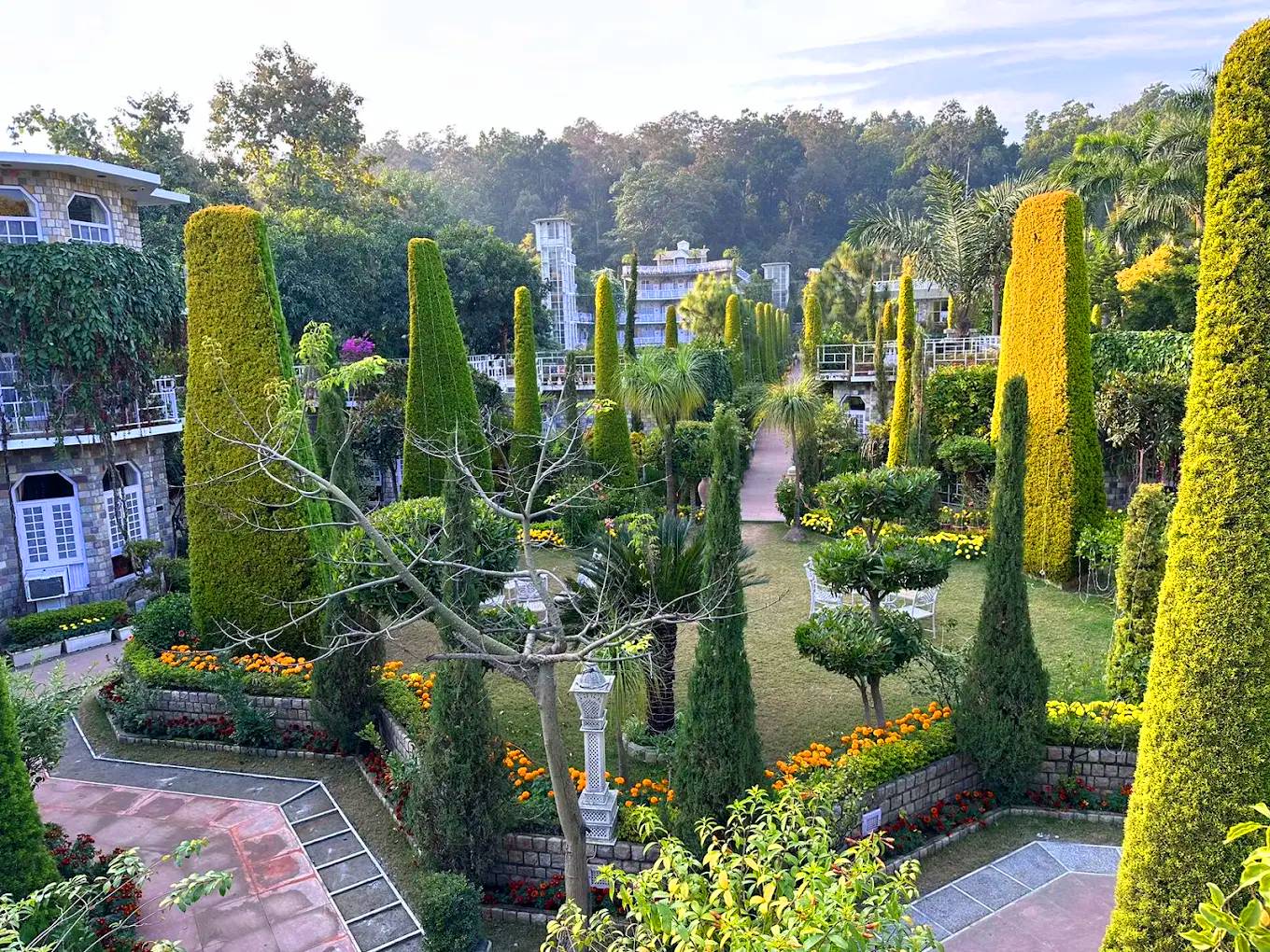
Nearly every destination wedding budget breaks down into four buckets: accommodation, catering, décor, and logistics/miscellaneous. Understanding roughly how these buckets split helps you avoid the common mistake of overspending on décor and running short on catering, or vice versa.
Before assigning numbers to any of the four categories below, nail down a realistic guest count range, not just an optimistic invite list, but a number that accounts for typical Indian wedding attendance patterns where invited guests often bring additional family members who were not on the original headcount. Building a 10–15% buffer into your initial budgeting for both rooms and catering prevents the uncomfortable last-minute scramble to squeeze extra costs out of an already-finalized budget.
Room costs depend on category and season. Standard cottage rooms typically run lower than pool-facing or family suite categories, and winter wedding season (October to February) commands premium rates compared to monsoon months. For a mid-sized wedding, couples usually block 40 to 80 rooms across two to three nights, since destination weddings involve guests staying through multiple functions rather than a single evening. Booking the full resort, or a guaranteed majority of its inventory, also gives more negotiating leverage on the overall package.
Per-plate rates vary by cuisine complexity and whether you want live counters, multiple cuisine stations, or a simpler buffet format. Since Corbett weddings typically run three to four functions (mehendi, haldi, sangeet, wedding), catering costs multiply across each event rather than being a single expense. In-house catering, where the resort's own kitchen handles everything, is usually more cost-efficient than bringing in an external catering team, since you avoid vendor entry fees and duplicate kitchen setup costs.
Décor costs scale with how much “empty space” needs dressing versus how much natural beauty the venue already provides. This is actually where Corbett resorts offer a meaningful saving: properties with mature gardens, stone architecture, and forest backdrops need far less floral and structural décor than a bare banquet hall to look wedding-ready. Couples can often achieve a high-impact look with focused décor on the stage and mandap area rather than covering every surface.
This bucket covers guest transport from Delhi or the nearest railway station, safari bookings for guests who want to combine the wedding with a wildlife excursion, entertainment (DJ, live music, choreography), photography and videography, and contingency costs for weather (tenting or indoor hall backup during shoulder-season rain).
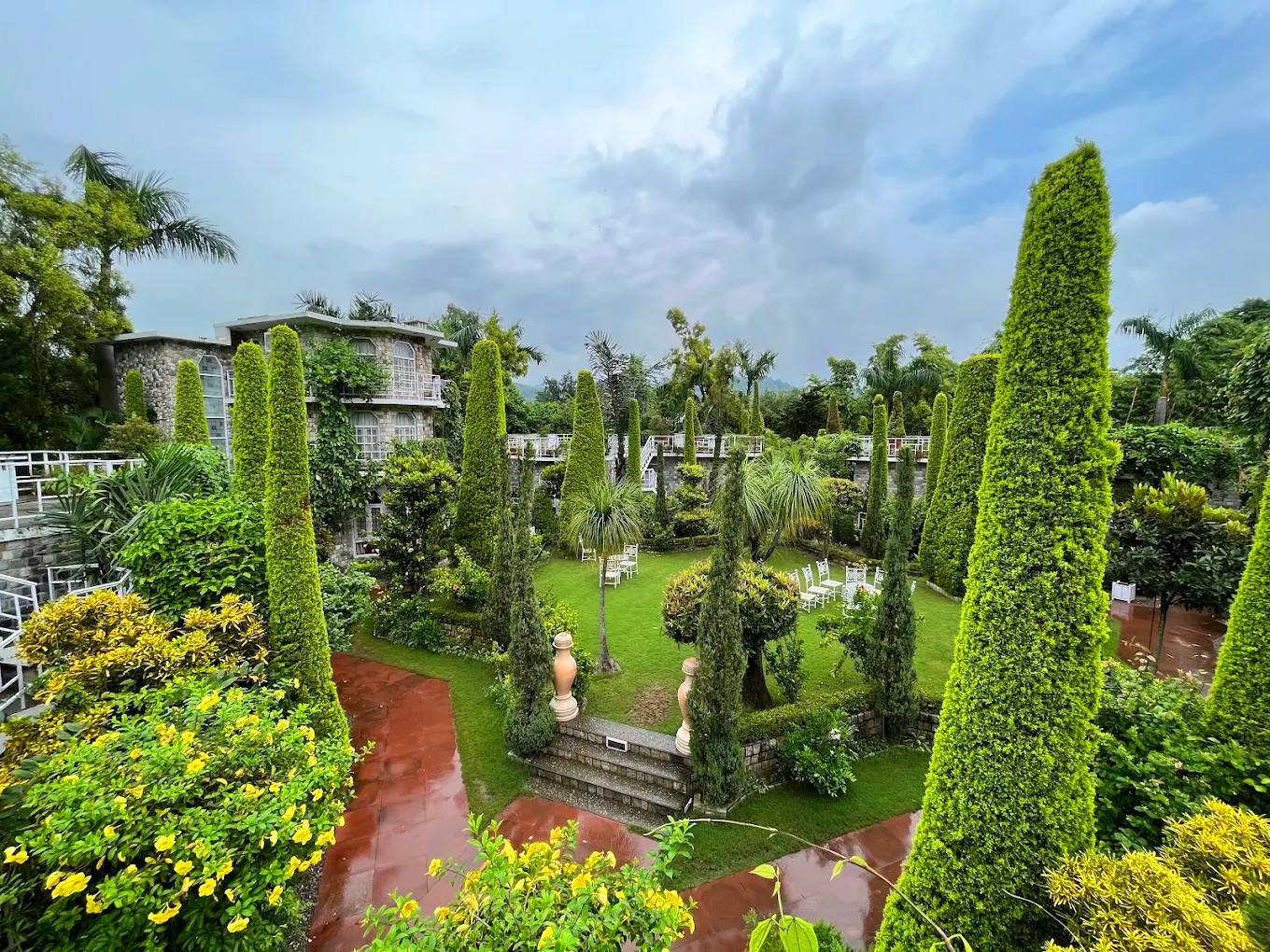
Three structural factors keep costs lower here: room rates in Ramnagar are generally more competitive than palace-hotel pricing in Udaipur or Jaipur; travel logistics are simpler and cheaper for a Delhi-NCR-heavy guest list, since it is a road trip rather than a flight; and the natural landscape reduces décor spend, as discussed above. None of this means corners are cut on quality, it simply reflects a less inflated market compared to more “iconic” wedding destinations.
While exact numbers depend on guest count and choices, a useful way to frame your budget is as percentages of the total: accommodation typically consumes 30–35% of the overall spend, catering 30–35%, décor 15–20%, and logistics/entertainment/photography the remaining 15–20%. Getting an itemized quote from the resort's events team, rather than a single lump-sum number, lets you see exactly where your money is going and where you have room to trim if needed.
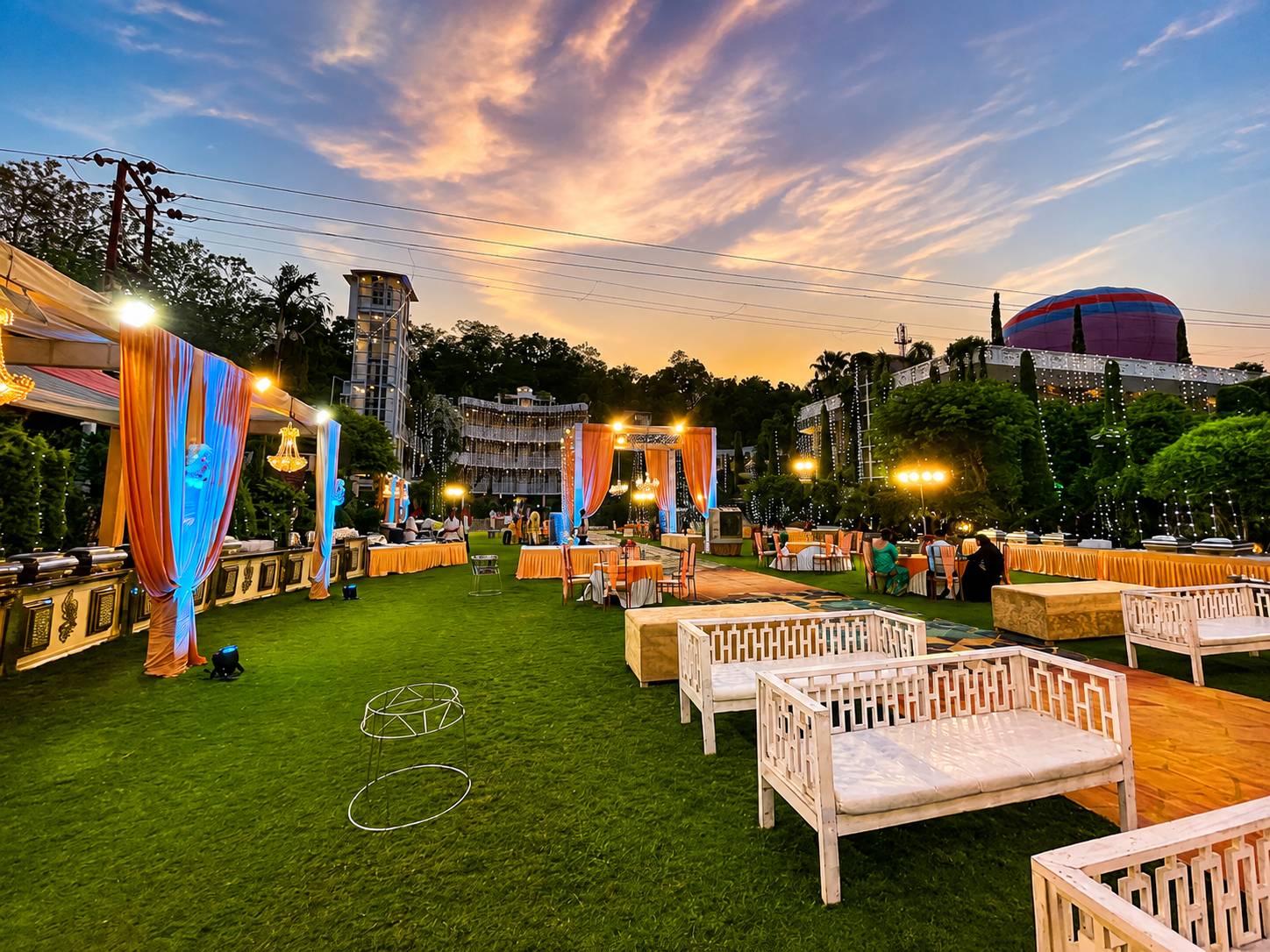
The Wild Crest's approach to weddings is built around consolidated packages that bundle decoration and catering with accommodation, so couples negotiate with one team rather than juggling separate contracts with outside vendors. Because the resort has hosted large corporate and school groups for years alongside weddings, its team is comfortable quoting accurately for bulk bookings rather than treating a 200-plate wedding as a one-off event that requires guesswork.
Indian weddings notoriously see guest counts fluctuate right up to the event, extended family and neighbors are often invited more loosely than a Western-style RSVP list assumes. This has direct budget implications: catering costs typically scale per confirmed plate, so a resort that can accommodate a 10–15% swing in final headcount without a chaotic renegotiation is genuinely valuable. Ask your venue directly how late you can adjust your final catering count and what the process looks like, since resorts experienced in Indian weddings usually build in this flexibility as standard practice rather than treating every headcount change as a fresh negotiation.
Indian destination weddings are frequently funded jointly across both families, which makes a clear, itemized budget breakdown even more valuable as a communication tool, not just a planning one. Sharing the four-category framework, accommodation, catering, décor, logistics, with contributing family members, along with an agreed range for each, tends to prevent the awkward mid-planning conversations that arise when one side assumes a different total budget than the other, or when spending decisions in one category are made without visibility into how it affects the overall plan.
Beyond the four major buckets, a handful of smaller expenses tend to catch couples off guard. Vendor entry or coordination fees apply when you bring in outside photographers, decorators, or entertainers rather than using the resort's in-house team. Extended-hours charges may apply if a function runs past an agreed cutoff time, common with sangeet nights that go later than planned. Additional guest add-ons, extra plates for last-minute confirmations, or extra rooms booked closer to the date, often come at a premium compared to rates locked in during initial planning. Building a 5–10% buffer into your overall budget specifically for these smaller line items avoids unpleasant surprises during final settlement.
A destination wedding at a Corbett or Ramnagar resort can be genuinely luxurious without matching the cost of a Rajasthan palace wedding, provided you budget deliberately across accommodation, catering, décor, and logistics rather than treating the whole event as a single number. Request a detailed, itemized quote from your shortlisted resorts, The Wild Crest included, before committing, so you know exactly what you are paying for at each stage.
Get a personalized wedding quote via the Contact Us page or check current room tariffs on the Tariff page.